Why Is My Dryer Not Heating? Causes & Fixes (2026)
Is your dryer running but not heating? Learn the top causes of a dryer not heating, from blown fuses to vent blockages, plus step-by-step troubleshooting for your home.
It is a common frustration: you load your wet laundry, start the cycle, and come back an hour later only to find your clothes are still cold and damp. The drum turns, the motor hums, but there is zero heat. A dryer not heating can be very frustrating.
When facing a dryer not heating, many homeowners assume the entire machine is broken. Fortunately, a dryer not heating is usually caused by a single failed component or a restricted exhaust pathway. Because the drive motor and heating circuits operate independently on electric dryers, the unit can tumble normally even when the heat system is offline. Remember, if your dryer is running but not heating, check these common issues.
This guide walks through the most common reasons an electric dryer stops producing heat, how to safely troubleshoot the issue, and when it is best to contact a local technician for professional DRYER REPAIR
Why is my dryer not heating?
A dryer fails to heat when the heating circuit is interrupted. Common culprits include a blown thermal fuse, a failed heating element, a defective high-limit thermostat, broken control boards, or a tripped circuit breaker. Restricted airflow from a clogged vent line can also cause safety sensors to cut power to the heating element.
Why does my dryer run but not heat?
An electric dryer uses separate circuits for motor operation and heating. The drum motor runs on a standard 120V line, while the heating element requires a 240V dual-pole connection. If one side of the dual-pole breaker trips, or if a safety component like the thermal fuse fails, the motor will continue to turn the drum without producing heat.
Dryer Runs but Does Not Heat: What Should You Check First?
Before opening up cabinet panels or buying replacement parts, follow a logical troubleshooting sequence. Randomly swapping components wastes time and money.
Step 1: Verify the Dryer Settings
Ensure the cycle selected actually uses heat. Cycles like “Air Fluff,” “Air Dry,” or specific eco-modes operate the motor without activating the heating element.
Step 2: Check the Dual-Pole Circuit Breaker
Electric dryers require a 240-volt power supply delivered via two separate 120-volt legs. If one leg trips at your home’s main electrical panel, the dryer motor may still receive 120 volts to tumble, but the heating element will not receive the full 240 volts needed to produce heat. Fully reset the breaker by flipping it off and back on.
Step 3: Inspect the Lint Filter and Exterior Vent
Check the lint screen inside the dryer door and inspect the exhaust hood outside your home. Poor airflow causes safety switches to trip, shutting down the heating circuit to prevent overheating.
Understanding Dryer Airflow: Why Restricted Vents Cause Heat Failures
Proper airflow is vital for electric clothes dryer performance. A dryer functions by pulling in ambient air, heating it, tumbling it through wet clothes, and exhausting the moisture-laden air through the ductwork.
[ Air Intake ] ➔ [ Heating Element ] ➔ [ Drum / Wet Laundry ] ➔ [ Lint Screen ] ➔ [ Exhaust Duct / Outdoor Vent ]
When lint builds up inside the exhaust hose or wall vent, air cannot escape. This leads to three direct problems:
-
Poor Drying Times: Clothes take two or three cycles to dry fully.
-
Overheating: Internal cabinet temperatures rise rapidly because thermal energy cannot escape.
-
Tripped Safety Devices: High cabinet temperatures trip thermal cutoffs and blown thermal fuses, cutting power to the heating element entirely.
If you fix a heating component without addressing a clogged duct, the new part will likely fail again quickly due to lingering high temperatures. For severe duct issues, addressing [Internal Link: Dryer Vent Problems] is essential before resuming normal operation.
8 Common Causes of a Dryer Heating Problem
If your dryer is running but not heating, one of the first steps is to inspect the vent. A blocked vent could be preventing heat from entering the drum, leading to a dryer not heating properly. If settings, power supply, and simple airflow checks look normal, an internal component may have failed.
1. Clogged or Restricted Dryer Vent
When you encounter a dryer not heating, it is essential to check the settings and ensure you have selected a cycle that uses heat. Some cycles may run the motor without activating the heating element, contributing to a dryer not heating.
-
What It Does: Channels moist, hot air out of your home.
-
Why It Causes No Heat: Severe clogs trap heat inside the housing, triggering thermal safety switches that shut down the heater.
-
Common Symptoms: Long dry times, an excessively hot dryer exterior, or a burning smell.
-
What to Check: Disconnect the duct from the wall and check for compressed lint, bird nests, or crushed foil hoses.
-
When to Call a Pro: If the vent line runs through complex interior walls, roofs, or long structural runs.
2. Failed Heating Element
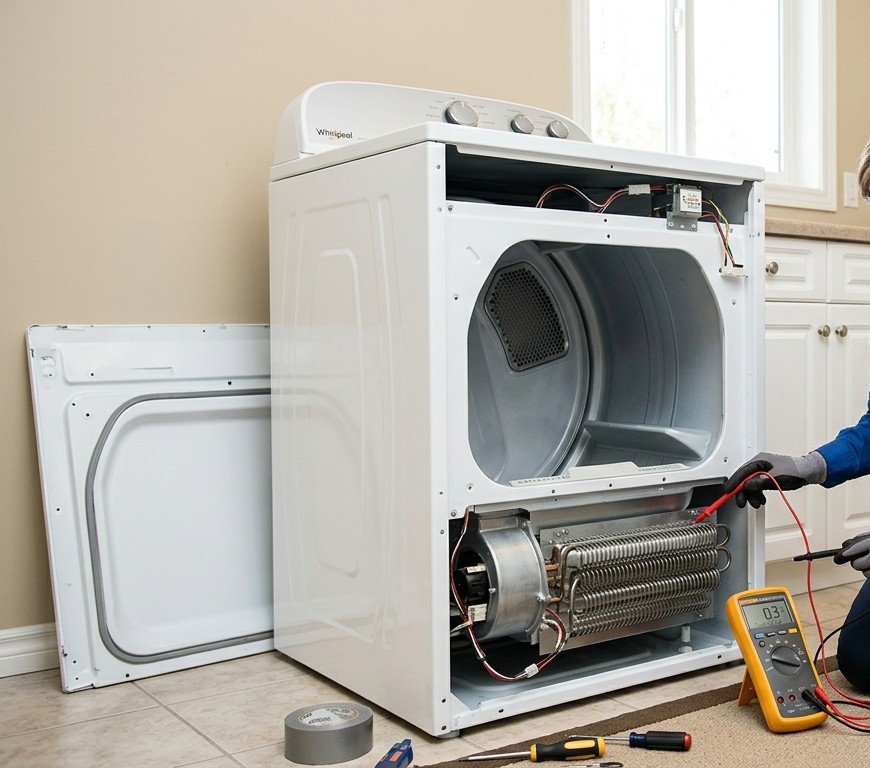
In situations where a dryer is running but not heating, the heating element may need to be replaced. Consider contacting a professional for this repair.
-
What It Does: Generates heat by passing electricity through a coiled metal alloy wire.
-
Why It Causes No Heat: Over time, the metal coil degrades, breaks, or shorts out, breaking the electrical path.
-
Common Symptoms: The dryer tumbles normally, but the air inside stays completely cold.
-
What to Check: Visually inspect the element (after disconnecting power) for physical breaks, charring, or disconnected terminals.
-
When to Call a Pro: If testing requires multi-meter continuity checks or disassembling internal cabinet assemblies.
3. Blown Thermal Fuse or Thermal Cutoff
-
What It Does: Acts as a safety mechanism designed to cut power if the dryer overheats.
-
Why It Causes No Heat: Once tripped by extreme temperatures, the fuse opens permanently and cuts off power to the heat circuit or motor.
-
Common Symptoms: The dryer stops heating suddenly after running hot, or won’t start at all on some models.
-
What to Check: Locate the fuse on the blower housing or heating element assembly and inspect for visible scorch marks.
-
When to Call a Pro: A blown thermal fuse is usually a symptom of another issue (like a vent obstruction). A technician can identify and fix the root cause before replacing the fuse.
4. Defective Cycling or High-Limit Thermostat
-
What It Does: Monitors internal drum temperature and cycles the heating element on and off to maintain selected settings.
-
Why It Causes No Heat: If a thermostat fails in the “open” position, it signals to the machine that the drum is already hot, keeping the heating element turned off.
-
Common Symptoms: Inconsistent temperatures, clothes taking too long to dry, or complete lack of heat.
-
What to Check: Check terminal connectors for looseness, corrosion, or heat damage.
-
When to Call a Pro: Measuring exact resistance curves against manufacturer specification charts requires specialized diagnostic tools.
5. Electrical Supply Problem
-
What It Does: Supplies dual-voltage power (120V for motor/controls, 240V for heat).
-
Why It Causes No Heat: A dead 120V leg leaves the motor working while removing the voltage required by the heating element.
-
Common Symptoms: Dryer tumbles normally, lights stay on, but zero heat is generated.
-
What to Check: Inspect the outlet for burn marks or melted plastic. Check your household breaker panel.
-
When to Call a Pro: Any outlet voltage testing or breaker panel troubleshooting should be handled by a qualified specialist or electrician.
6. Damaged Wiring or Burned Connections
-
What It Does: Delivers current between control boards, switches, and heating elements.
-
Why It Causes No Heat: High amperage combined with vibration can cause push-on wire terminals to loosen, overheat, melt, or snap.
-
Common Symptoms: Intermittent heating, burning plastic smells, or sudden loss of heat during a cycle.
-
What to Check: Look for charred wire insulation or loose spade connectors on accessible component terminals.
-
When to Call a Pro: Wiring harness repairs require proper high-temperature terminals and heat-shrink insulation.
7. Faulty Timer or Electronic Control Board
If you suspect your dryer is not heating due to a thermal fuse, it may be wise to consult a technician for a thorough inspection.
-
What It Does: Manages the electrical timing and power routing to various dryer components.
-
Why It Causes No Heat: Solder joints can crack or internal relays controlling the heater line can burn out.
-
Common Symptoms: The dryer operates fine on some cycles (like Timed Dry) but fails on others (like Auto-Sensing), or fails across all cycles.
-
What to Check: Inspect electronic boards for dark scorch marks or blown capacitors.
-
When to Call a Pro: Control boards are sensitive to electrostatic discharge and require precise wiring transfers.
8. Excessive Lint Buildup in Internal Cabinet
-
What It Does: Lint bypasses the screen trap over time and accumulates around internal mechanics.
-
Why It Causes No Heat: Insulates thermal sensors, leading to false temperature readings that shut off the heating circuit prematurely.
-
Common Symptoms: Reduced efficiency, short cycle times with damp clothes, or hot spots on the cabinet exterior.
-
What to Check: Remove the lint trap filter and check down inside the chute with a flashlight.
-
When to Call a Pro: Deep cabinet cleaning requires opening sealed housing compartments near internal electrical lines.
Dryer Running but Not Heating” vs. “Dryer Not Running at All
Understanding why your dryer is not heating can help you save time and money. Common reasons include issues with the heating element or a clogged vent. Troubleshooting these areas can often resolve your dryer not heating problems.
It helps to distinguish between these two symptoms when reporting an issue to a service professional:
| Symptom | Primary Suspect Components | Electrical Context |
| Runs, but no heat | Heating element, high-limit thermostat, thermal cutoff, missing 120V leg on 240V circuit. | Motor circuit is intact; heater circuit is interrupted. |
| Does not run at all | Main thermal fuse, door switch, drive motor, thermal cut-in, main control board. | Primary power or main safety circuit is fully open. |
Safety First: Precautions During Dryer Inspection
When troubleshooting a dryer not heating, ensure all safety precautions are followed to avoid any hazards during inspection.
Working on household appliances requires practical safety precautions:
-
Unplug the Appliance: Always disconnect the power cord from the wall outlet, or switch off the dedicated circuit breakers before removing panel screws.
-
Beware of Sharp Edges: Sheet metal panels inside dryer cabinets are sharp. Wear protective work gloves during inspection.
-
Never Bypass Safety Switches: Thermal fuses and high-limit thermostats exist to prevent house fires. Never bypass, bridge, or jumper a thermal fuse or thermostat as a permanent fix. Replacing a blown safety fuse with a wire jumper leaves your home vulnerable to thermal runaway and fire hazards.
When Should You Call a Dryer Repair Technician?
While cleaning a lint trap or resetting a tripped household circuit breaker are quick DIY tasks, internal diagnosis requires practical experience and specialized tools.
Consider contacting a local professional if:
-
Resetting the circuit breaker does not restore heat.
-
You smell burning plastic or notice scorched wiring connectors.
-
Multi-meter testing involves live circuit measurements or complex wiring schematics.
-
You need an accurate diagnosis without guessing and buying unneeded components.
If you live in northern climates where heavy laundry loads and cold weather put extra demand on home appliances, getting fast assistance from a technician experienced in dryer repair in Edmonton ensures your unit is serviced safely according to local electrical codes. A licensed professional providing appliance repair in Edmonton can diagnose complex control board or high-amperage heating failures efficiently.
Conclusion
A dryer not heating is a common household inconvenience, but it doesn’t always mean you need a brand-new appliance. By systematically checking your settings, clearing your exhaust pathways, and verifying power supply, you can narrow down whether the issue stems from simple airflow restriction or an internal electrical failure. When safety devices or heating elements need replacement, relying on a local dryer repair technician keeps your laundry routine running smoothly and safely. Don’t let a dryer not heating spoil your laundry day.
Frequently Asked Questions
Why is my dryer running but not heating?
Here are sevrral reasons dryer not heating, An electric dryer uses separate electrical paths for turning the drum and powering the heater. If a heating element breaks, a thermal safety fuse trips, or one side of your home’s 240V circuit breaker trips, the motor can still run the drum while the heater remains off.
Can a clogged dryer vent cause no heat?
Yes. A clogged vent traps heat inside the dryer cabinet. This causes thermal protection devices, such as the high-limit thermostat or thermal fuse to trip, immediately cutting off power to the heating element to prevent a fire can cause dryer not heating.
How do I know if my dryer heating element is bad?
A failed heating element often shows physical signs of damage, such as a burnt, coiled wire that has broken apart or charred terminals. Technicians confirm a bad heating element by testing it for continuity using a multimeter with the dryer unplugged.
Can a blown thermal fuse stop a dryer from heating?
Yes. On many electric dryer models, a blown thermal fuse breaks the circuit leading directly to the heating element, causing the dryer to continue tumbling without generating heat. On other models, a blown fuse prevents the dryer from starting altogether.
Why does my dryer take so long to dry clothes?
Long dry times are most frequently caused by restricted airflow from a lint-filled duct hose or vent cap. It can also be caused by a failing heating element that cycles erratically, or a weak thermostat.
Is it safe to use a dryer that is not heating properly?
It depends on the cause. If the loss of heat is due to a clogged vent, continuing to run the machine can overheat the drive motor and pose a fire hazard. It is best to resolve the issue before running additional laundry cycles.
When should I call a dryer repair technician?
You should call a professional if basic fixes—like clearing the lint trap, inspecting the exhaust hose, and resetting circuit breakers—do not restore heat. Any repairs involving wiring, internal component testing, or control board replacement are best handled by an qualified technician.